
- ECS
- 19 Apr 2021
Top 8 Benefits Of Data Entry Outsourcing Services
As businesses expand their digital operations, the amount of information they need to collect, organise, process and maintain continues to grow. From customer records and sales information to product catalogues and supplier databases, accurate data management has become an important part of daily business operations.
However, managing large volumes of data internally can consume valuable time, increase operational costs and place additional pressure on employees. This is why many organisations consider data entry outsourcing services as a practical way to manage repetitive data-related tasks.
Outsourcing allows businesses to work with external teams that specialise in data entry, data processing and information management. Depending on the service provider and project requirements, businesses can also benefit from flexible resources, organised workflows and dedicated quality checks.
If you are considering whether outsourcing is suitable for your organisation, here are eight important benefits worth understanding.
1. Better Data Management and Organisation
Managing business information is not just about entering details into a spreadsheet or database. Data needs to be organised in a consistent format so employees can find, review and use it whenever required.
Professional data entry outsourcing teams can help businesses organise information across spreadsheets, databases, CRM systems and other platforms.
Common tasks may include:
- Entering and updating business records.
- Organising customer and supplier information.
- Maintaining structured spreadsheets.
- Removing duplicate or unnecessary records.
- Categorising and indexing information.
- Converting documents into digital formats.
Well-organised data makes everyday business operations easier and can support reporting, research and decision-making. It also helps reduce the time employees spend searching for information.
2. Faster Project Completion and Time Savings
Large data entry projects can take considerable time when handled by a small in-house team. This becomes particularly challenging when a business needs to process thousands of records within a specific deadline.
Outsourcing can provide access to additional resources and experienced data entry professionals who can work on repetitive tasks according to an agreed schedule.
For example, a business may outsource customer database updates, product data entry, document conversion or invoice processing rather than assigning all these activities to its existing employees.
Working with an outsourcing company in another time zone may also provide opportunities for extended working hours. However, this depends on team availability, communication arrangements and project requirements.
The main advantage is that businesses can allocate more time to activities such as customer service, marketing, product development and business planning.
3. Improved Customer Relationship Management
Accurate customer information is important for maintaining effective communication and building long-term relationships.
Outdated contact details, duplicate records and incomplete customer profiles can create problems when businesses manage enquiries, send updates or run marketing campaigns.
Data entry outsourcing services can help maintain customer databases by:
- Updating contact information.
- Organising customer records.
- Removing duplicate entries.
- Maintaining consistent data formats.
- Categorising customer information.
- Updating records based on approved information.
Better-organised customer data can help businesses understand their audience and manage communication more effectively.
However, outsourcing data entry alone does not guarantee customer loyalty. Businesses still need relevant communication, good customer service and products or services that meet customer expectations.
4. Stronger Data Security and Confidentiality Processes
Businesses often handle sensitive information, including customer details, supplier records, financial documents and internal business data. Protecting this information should be a priority when choosing an outsourcing partner.
A professional provider should have clear data security and confidentiality procedures. These may include:
- Non-disclosure agreements (NDAs).
- Restricted access for authorised personnel.
- Role-based access permissions.
- Secure file transfer methods.
- Activity monitoring and audit trails.
- Appropriate server and device security.
- Data backup and retention procedures.
Before outsourcing, businesses should ask how the provider stores, accesses, processes and protects information.
It is also important to understand where data will be stored, who can access it and how it will be handled after the project ends. An NDA is useful, but it does not replace proper technical safeguards, contractual responsibilities or compliance with applicable data protection laws.
5. Lower Operational Costs
Hiring an in-house team for data entry requires more than paying employee salaries. Businesses may also need to invest in office space, computers, software, training, recruitment and ongoing administration.
Outsourcing can help reduce some of these expenses by allowing businesses to use external resources instead of maintaining a larger permanent team.
Potential cost advantages include:
- Reduced recruitment and training expenses.
- Less investment in additional office infrastructure.
- Lower equipment and software requirements.
- Flexible staffing based on project workload.
- Reduced administrative responsibilities.
- Access to experienced professionals without building a full internal department.
The actual savings depend on the project size, service provider, pricing model and level of supervision required. Businesses should compare the total cost of outsourcing with the cost of managing the same work internally rather than relying on general savings percentages.
6. Reduced Workload for In-House Employees
Employees often spend a significant amount of time handling repetitive administrative tasks. Activities such as updating spreadsheets, entering customer records, processing documents and organising product information can reduce the time available for more important responsibilities.
Outsourcing suitable data entry work allows internal teams to concentrate on tasks that require their business knowledge and direct involvement.
For example:
- Sales teams can focus on developing customer relationships.
- Marketing teams can work on campaign planning and performance.
- Operations teams can improve internal processes.
- Managers can spend more time reviewing business performance.
- HR teams can focus on recruitment and employee development.
This division of responsibilities can improve workflow efficiency and help businesses make better use of their existing employees.
7. More Organised Data for Marketing Activities
Successful marketing campaigns depend on having relevant and reliable information about the target audience.
When customer records are incomplete or outdated, businesses may struggle to organise their audience, maintain contact lists and prepare targeted campaigns.
Data entry and data management outsourcing services can support marketing activities by helping businesses:
- Organise customer and prospect databases.
- Update contact records.
- Categorise information using relevant criteria.
- Maintain consistent customer data.
- Prepare structured datasets for analysis.
- Remove duplicate and outdated records.
These activities can make it easier for marketing teams to work with their data and plan audience segments.
However, effective targeting also depends on customer research, campaign strategy, consent requirements and the quality of the marketing message. Outsourced data entry supports these activities but does not replace marketing expertise.
8. Improved Productivity and Business Flexibility
As a business grows, its data management requirements can change quickly. A company may need to process a large volume of product information during a new launch or update thousands of records after a supplier change.
Maintaining enough permanent employees to handle every workload increase may not be practical.
Outsourcing provides an opportunity to adjust resources according to project requirements. Businesses can assign specific tasks to an external team and discuss additional support when workloads increase.
Potential productivity benefits include:
- Access to people experienced in data entry tasks.
- Flexible support for short-term and ongoing projects.
- Better allocation of internal resources.
- Consistent workflows for repetitive activities.
- Support for large-volume data processing.
- Reduced pressure on existing employees.
The results depend on how effectively the outsourcing provider manages its team, quality checks and delivery schedules.
How to Choose the Right Data Entry Outsourcing Company
Although outsourcing offers several advantages, choosing the wrong provider can create problems with data quality, communication and security.
Before selecting a company, consider the following factors:
- Relevant experience: Check whether the provider has handled projects similar to yours.
- Quality assurance: Ask how data accuracy is checked and how errors are corrected.
- Data security: Review confidentiality agreements, access controls and information handling procedures.
- Technology and tools: Understand which software and systems the provider uses.
- Turnaround time: Agree on realistic delivery schedules based on project complexity.
- Communication: Establish how progress updates and issues will be reported.
- Pricing: Compare the complete service cost, including any additional charges.
- Sample project: Request a small trial assignment to evaluate the provider’s work.
A clear agreement covering project scope, responsibilities, delivery standards and data protection can help establish a productive working relationship.
Final Thoughts
Data entry outsourcing services can offer several practical advantages to businesses that regularly handle large volumes of information. From better data organisation and faster processing to lower operational costs and improved employee productivity, outsourcing can help simplify repetitive business activities.
However, the benefits depend on selecting the right service provider and establishing clear expectations from the beginning.
Before making a decision, evaluate your current workload, data security requirements, budget and expected turnaround time. A suitable outsourcing partner should be able to support your requirements while maintaining agreed standards for accuracy and confidentiality.
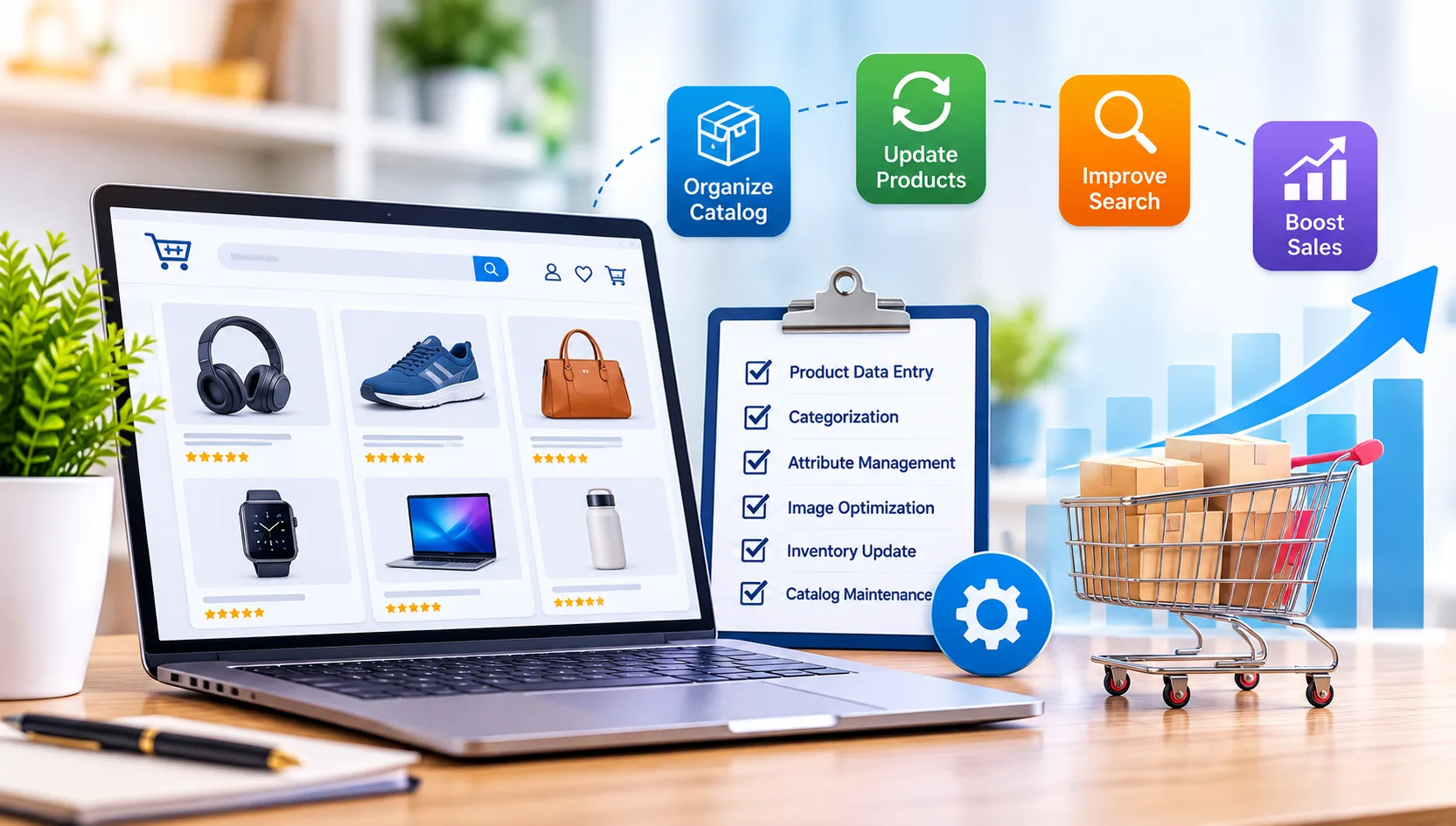
If your business needs help with data entry, data processing or eCommerce product catalogue management, eCommerce Catalog Solutions can help you explore suitable service options. Discuss your project requirements and request a consultation to understand how outsourcing may fit your business operations.