
- ECS
- 01 Jun 2021
5 Factors to Improve Conversion Rate Of ECommerce
The eCommerce market has become increasingly competitive, with businesses constantly looking for ways to attract customers and generate more sales. However, launching an online store is only the first step. Keeping it updated, managing product information, improving the shopping experience and converting visitors into paying customers require ongoing effort.
One of the most important performance indicators for any online store is its conversion rate. It shows the percentage of visitors who complete a desired action, such as purchasing a product, signing up for an account or submitting an enquiry.
For most online retailers, increasing the purchase conversion rate is a major business goal. Even a small improvement can make a difference when a website receives consistent traffic.
If your online store attracts visitors but struggles to generate orders, it may be time to review the shopping experience and identify areas that need improvement.
Here are five important factors that can help improve your eCommerce conversion rate.
1. Keep Your Online Store Clean and Easy to Navigate
First impressions matter when customers visit an online store. A cluttered website with confusing menus, excessive banners or poorly organised product pages can make it difficult for visitors to find what they need.
A clean and well-structured website helps customers browse products comfortably and move towards checkout without unnecessary distractions.
Here are some ways to improve your store’s design and navigation:
- Use a simple layout: Avoid overcrowding pages with unnecessary banners, pop-ups and promotional messages.
- Organise product categories: Create clear categories and subcategories so customers can find relevant products easily.
- Improve product search: Provide useful search functionality and filters for attributes such as price, size, colour and brand.
- Use clear product images: Upload high-quality images that show products from useful angles while keeping file sizes optimised.
- Write informative product descriptions: Explain important features, specifications, materials and other relevant details.
- Make navigation consistent: Keep menus, buttons and page layouts easy to understand across the website.
Your landing pages should also have a clear purpose. Include relevant content, useful links, attractive product images and a noticeable call to action.
Remember that a good-looking website is not necessarily an effective one. Focus on making it easy for visitors to find products, understand their features and complete a purchase.
2. Build a Simple and Trustworthy Checkout Process
The checkout process is one of the most important stages of the customer journey. A shopper may spend time browsing products and adding items to the basket but still leave without purchasing if the checkout experience is confusing.
Complicated forms, unexpected delivery charges and limited payment options can create unnecessary barriers.
To make checkout more convenient, consider the following improvements:
- Offer guest checkout: Allow customers to purchase without creating an account.
- Reduce unnecessary form fields: Ask only for information required to process and deliver the order.
- Display all costs clearly: Show product prices, delivery charges, taxes and other applicable fees before payment.
- Provide familiar payment options: Support payment methods commonly used by your target customers.
- Show checkout progress: Use a progress indicator to explain the steps involved.
- Make the process mobile-friendly: Ensure customers can complete purchases comfortably on smartphones and tablets.
- Provide clear error messages: Help customers understand how to correct payment or form errors.
You should also display relevant payment security information and make your return and refund policies easy to access.
The objective is to create a checkout process that feels straightforward, transparent and reliable. The fewer unnecessary obstacles customers encounter, the easier it becomes for them to complete their purchases.
3. Increase Customer Trust and Reliability
Trust plays a major role in online purchasing decisions. Unlike traditional shopping, customers cannot physically inspect products or speak to a salesperson before placing an order.
They depend on the information available on your website to decide whether your business is reliable.
If your store provides incomplete product information, unclear policies or limited contact details, potential customers may hesitate to buy.
You can build greater customer confidence through these steps:
- Display genuine customer reviews: Allow buyers to share their experiences with your products and services.
- Show accurate product information: Provide clear descriptions, specifications, prices and availability details.
- Publish transparent policies: Make shipping, returns, refunds and privacy information easy to find.
- Provide business contact details: Give customers a clear way to contact your support team.
- Explain your business: Introduce your company, its products and what makes your store different.
- Use secure payment integrations: Work with reputable payment providers and maintain appropriate website security.
- Share authentic testimonials: Publish genuine customer feedback with appropriate permission.
You can also create an informative About Us page that explains your business background, product selection and approach to customer service.
Avoid publishing exaggerated claims or fabricated reviews. Genuine information and consistent service are more valuable for building long-term customer relationships.
4. Offer Competitive Prices and Relevant Promotions
Pricing can strongly influence whether a customer completes a purchase. Shoppers often compare similar products across different websites before deciding where to buy.
If your prices are significantly higher than competing stores without offering additional value, customers may choose another seller.
However, competing on price does not mean you should always offer the lowest possible price. Your pricing strategy should consider product costs, delivery expenses, profit margins, customer expectations and competitor activity.
Here are some practical ways to make your offers more competitive:
- Monitor prices of comparable products from relevant competitors.
- Offer seasonal discounts and limited-time promotions where appropriate.
- Create product bundles that provide useful value to customers.
- Provide loyalty rewards for returning buyers.
- Set minimum order values for selected promotions.
- Offer discounts on relevant complementary products.
- Clearly communicate the terms and conditions of every offer.
Competitor price monitoring can help you understand how similar products are priced in the market. However, price comparisons should consider product specifications, delivery charges, warranties and other differences rather than looking at the headline price alone.
A sensible pricing and promotion strategy can help attract customers while protecting your business’s profitability.
5. Keep Your eCommerce Website and Product Catalogue Updated
An outdated online store can create problems for both customers and store administrators. Incorrect prices, unavailable products, old images and incomplete product descriptions can reduce customer confidence and make purchasing decisions more difficult.
Regular website and catalogue maintenance is therefore essential.
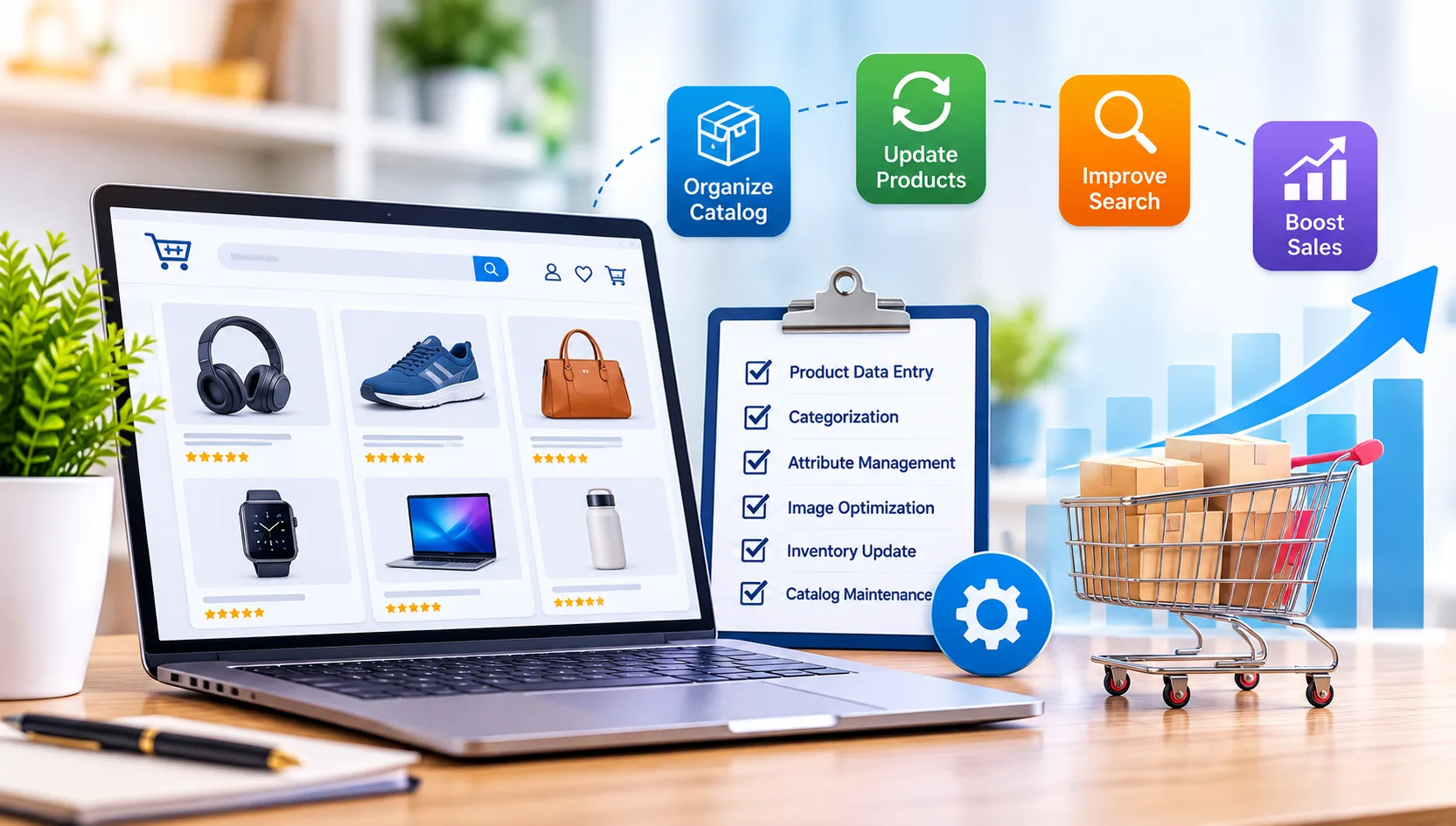
Your product catalogue should contain accurate and consistent information, including:
- Product names and descriptions.
- Product prices and availability.
- SKUs and product identifiers.
- Product specifications and attributes.
- Product images and variations.
- Categories and subcategories.
- Shipping and packaging information, where relevant.
You should also check website performance, update software and extensions, review broken links and ensure that important pages work correctly.
Managing these tasks manually can become difficult when your store contains thousands of products or operates across multiple sales channels.
This is why some businesses outsource product data entry and catalogue management services. Experienced professionals can help with bulk product uploads, product information updates, image management, categorisation and other catalogue-related tasks.
Outsourcing may also provide additional support for competitor price monitoring and regular product updates, depending on the service agreement.
An organised and up-to-date catalogue makes it easier for customers to find relevant products and understand what they are purchasing.
Final Thoughts
Improving your eCommerce conversion rate requires more than attracting visitors to your website. You also need to give those visitors a convenient, trustworthy and straightforward shopping experience.
Start by reviewing your website navigation and checkout process. Then focus on customer trust, competitive pricing and regular product catalogue maintenance.
It is equally important to measure your results. Monitor your conversion rate, checkout abandonment, average order value and sales by traffic source to identify which improvements are making a difference.
If product catalogue management is taking too much time, consider outsourcing suitable product data entry tasks to free up internal resources.
By improving these five areas consistently, you can remove common barriers to purchasing and create a better shopping experience for your customers.